Friday, March 31, 2017

POLITICAL RISK ANALYSIS IS BOOMING!

AM | @agumack

"... political risk analysis is booming" — Huw van Steen

Political risk is back! That's great news for those of us who find the issue relevant—especially when it comes to cost of capital calculations. In early 2015 I took part in a symposium at Institut des Sciences de l'Homme in Lyon about the great Italian economist/thinker Ferdinando Galiani (1717-1787), who in his book Della Moneta (1751) established an explicit link between the supply of credit and the quality of governance [see]. I have also constructed an 'Index of Checks and Balances' [see], which I compared to each country's stock of local currency bonds in terms of GDP.

Unsurprisingly, the cost of capital tends to be lower in well-run countries (the Nordics in particular). Now one member of the EU Business School Finance Club will write a thesis about these issues. Great news!

* * *

Motivated by recent political events, the Financial Times has been publishing some interesting articles on political risk. I will single out Huw van Steen's March 15 piece and Gillian Tetts' take on Bridgewater Associates' analysis of populism (*). You may also want to watch this video by the FT. (Gillian is back with a fresh piece on political risk in Silicon Valley). Do you have ideas/suggestions for a political/country risk index? Can we harness the diversity of our student base to get a sense of perceptions of political risk in Kazakhstan, Colombia and ... the United States?

(*) Huw van Steen: "An emerging market toolkit is now essential for investors in the West", Financial Times, 15 March 2017; Gillian Tett: "Populism emerges as a key economic influence", Financial Times, 23 March 2017.
___________________

Thursday, March 9, 2017

MORE STORIES ON QUANTS

AM | @agumack

"... backward looking data can fizzle out" — Robin Wigglesworth

There are three very interesting stories on quants in today's FT (make it four if you count John Authers' piece on smart beta). Robin Wigglesworth —who writes more persuasively on quants than on markets and interest rates— mentions a Two Sigma competition in which contestants are given three months to code a trading algorithm based on four gigabytes of financial data. The winner will pocket $100,000 (*). His 'Big Read' piece is also pretty interesting, as he mentions the 2007 débâcle of Goldman Sachs' Quantitative Investment Strategies. The sector has since then recovered, and assets under management for quantitatively-oriented hedge funds are approaching the $1 trillion mark. (Don't miss the short section on GS' alternative risk premia unit).

                                                                      * * *

Can we possibly use some of this material in class? Yesterday in the Financial Markets exam I had students estimate two entry points using 20-day and 50-day moving averages. Shortly I'll be testing some (extremely simplified) exercises with 'Natural language processing'. We could take speeches from the Fed chair, or a sample of research reports. Here's Dennis Walsh of Goldman Sachs:

Goldman's algorithms can systematically look for verbal clues from analysts on a call that might indicate whether they were pleasantly or unpleasantly surprised at the results—and therefore upgrade their outlook in response. "There's a tendency towards praise to keep in management's good books, but only marginally. If 20 out of 30 analysts say 'great quarter' then it probably was".


(*) Robin Wigglesworth: "Lessons from the quant quake" and "Funds adopt novel methods to hunt down new talent"; John Gapper: "Technology outsmarts the human investor". See also John Authers: "Popular 'smart beta' strategies reveal their true value in trial". All from the March 9 issue of the Financial Times.

_______________

Tuesday, March 7, 2017

THE OUTSIDER

AM | @agumack

"Des volumes de cette importance ne passent pas inaperçus" — François-Xavier Demaison

I watched L'Outsider over the week-end. This is the movie about Société Générale trader Jérôme Kerviel, whose bets on the Euro Stoxx 50 (traded on Eurex), Xetra DAX (traded on Eurex) and FTSE 100 (traded on Euronext.liffe) cost €4.9 billion to the bank in January 2008. We discussed this stunning affaire in Ethics in the Financial World. I thouroughly enjoyed the movie. Because Kerviel was well-versed in all things IT, he was able to conceal a sizeable portion of his trades. Who is to blame? Christophe Barratier, the film director, skillfully leaves that question open (*).


Not long before the implosion of Kerviel's trades, in October 2007, Eurex complained to Société Générale that Kerviel's positions amounted to 30% of open interest in DAX futures. In the movie, members of the trading desk refer to futures positions as Spiel. There was obviously a massive failure of compliance—although the bank had a strong reputation in that regard. What also transpires is a world totally dominated by ... men. Apart from Kerviel's lover, his mother and a strong-minded compliance official who shows up towards the end, women play no role in the movie. And this was precisely part of the problem.

Too much testosterone in the (trading) room!

(*) "Kerviel n’aurait jamais dû être trader", L'AGEFI, 22 June 2016

_________________

Friday, February 17, 2017

DAMODARAN WATCH: THE KIM KARDASHIAN OF VALUATION

AM | @agumack

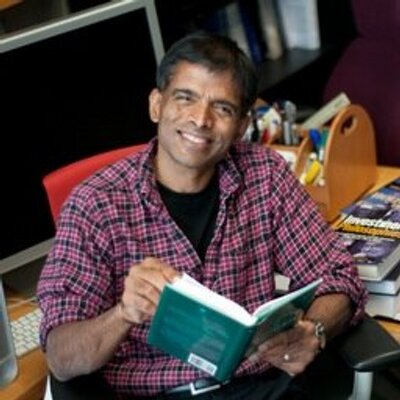
Students know that I am a fan of Professor Aswath Domadaran. In class, I call him "The Lionel Messi of Finance". But it turns out that he calls himself "The Kim Kardashian of Valuation"! That's because, as he tells Barry Ritholz in the podcast below, he "shows everything". This is of course a reference to the tonnes of material that he publishes online. You can see some of the relevant links to the right. Anyway, here are some recent ideas from the man himself. Enjoy!

[1] Apple valuation. Prof. Damodaran calls Apple [Nasdaq: AAPL] the "Greatest Cash Machine in History" [see his detailed post]. (I remember that we used to say the same thing about Google a few years ago). In his Free Cash Flow to the Firm (FCFF) valuation, he arrives at a value per share of $129.02. As the market closed yesterday at $135.35, the shares are "fullly valued", although he will wait for a price of $140 before selling his position. Well done! In class at EU Business School, I use Apple as an example of how a company can successfully 'declare war on its WACC'. The Cupertino giant does that by outsourcing its production (lower beta), by turning the iPhone into a non-discretionary good (lower beta), by gently increasing its debt ratio, and by aggressively using interest rate and foreign currency swaps (lower cost of debt). 

[2] Podcast. Listen to this Barry Ritholz podcast with Professor Damodaran; he calls himself "The Kim Kardashian of Valuation". And he discusses lots of topics about finance, valuation, active vs. passive asset management, etc.

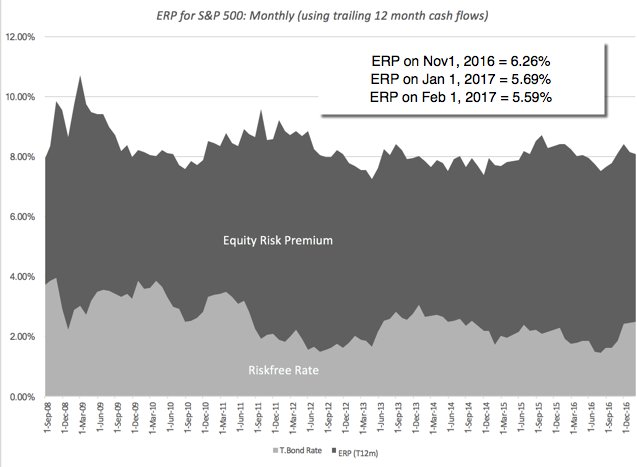
[3] Equity Risk Premium. On his Twitter account, Prof. Damodaran publishes his monthly estimation of the Equity Risk Premium. Instead of relying on historical data, he estimates the expected return on the S&P500 index by projecting cash flows in a two-stage growth version with a Terminal Value. We might take a look at that method this summer in Corporate Finance at EU Business School. The latest estimate: 5.59%.


 ______________

Sunday, February 12, 2017

FIRST MEETING OF THE EU BUSINESS SCHOOL'S FINANCE CLUB

AM | @agumack

We finally had the first meeting of the EU Business School Finance Club. Congratulations to Luka! Let us remember the date: February 7, 2017. It's all about persevering! We discussed a number of ideas about ... what to do at the Club. The truth is that we still don't know in what direction we are going to take it. We discussed some proposals about running investment portfolios. Nikita showed us how a Swedish bank was sponsoring a portfolio contest at a Latvian university—with both long-term and short-term investments. The winners get real money. Interesting idea! Another participant suggested inviting guests to discuss big data and the use of algorithms in the context of asset management. That would be really useful.

* * *

I briefly discussed my views on what to do at the Club. I am a rather bookish person, so book reviews will always be part of my suggestions. I could review Ruchir Sharma's The Rise and Fall of Nations. Forces of Change in the Post-Crisis World (New York: W.W. Norton, 2016); I already mentioned the chapter about "Good Billionaires, Bad Billionaires" in the course on Ethics in the Financial World. And Prof. Damodaran's book is high on my agenda too (we have already ordered it at EU Business School).

At the next meeting I plan to introduce three 'products':

1. The EU Business School Finance Club's Financial Conditions Index. It combines a number of credit market indicators (spread Treasuries/speculative grade bonds, the US yield curve, the iTraxxEurope Crossover CDS index and the iTraxxBRIC CDS index), a few exchanges rates to the USD, and some commodity prices. It is already up and running, so I'll post shortly about it.

2. The EU Business School Finance Club's Global Dollar Liquidity Indicator. It comprises the stock of foreign central banks' holdings of US Treasury bonds under custody of the US Federal Reserve, and the Fed's own 'Fed credit' item on the asset side of the central bank's balance sheet. See our first post

3. The EU Business School Finance Club's Country Risk Index. It combines a series of governance measures —judicial independence, freedom of the press, network readiness and central bank independence— that indicate the strength of political checks and balances in each country. I trust that the diversity of our student base will help us to improve the index over time.

Finally, I provided some views on the extraordinary challenges faced by active asset managers. On the one hand, the Vanguard juggernaut continues unabated. On the other hand, quants appear to be the only salvation for active asset managers. But where does that leave traditional discounted cash flow valuation? Questions, more questions.

_________________

Friday, February 10, 2017

THE $50BN MALE GROOMING MARKET AND THE DETERMINANTS OF BETA

AM | @agumack

What a great story when you need to teach about beta and the CAPM! Lindsay Whipp reports on the ups and downs of the $50bn market for male grooming [1]. What caught my attention was the following paragraph:

The slowdown in growth for male grooming products is partly explained by lacklustre economic growth, analysts say. Unlike women, who count beauty products as essential items, for many men, particularly those with families, male grooming items —with the exception of razors— more easily drop off the shopping list when money gets tight. Brazil, a top male grooming products market, had been a particularly bright spot, having enjoyed a 16 per cent CAGR increase in the five years to 2015. But as the nation’s economy struggles in a deep recession, growth in 2016 is estimated at 4.6 per cent to $6.79bn.

Remember Prof. Damodaran's 'determinants of beta': "... the degree to which a product's purchase is discretionary should affect the beta of the firm manufacturing the product. Thus, the betas of discount retailers such as Wal-Mart, should be lower than the betas of high-end specialty retailers, such as Tiffany's, because consumers can defer the purchase of the latter's products during bad economic times" [2].

                              https://www.ft.com/__origami/service/image/v2/images/raw/http%3A%2F%2Fcom.ft.imagepublish.prod-us.s3.amazonaws.com%2Fd4261904-ea38-11e6-967b-c88452263daf?source=next&fit=scale-down&width=600


[1] Lindsay Whipp: "Made-up men reflect changing face of male grooming", Financial Times, 6 February 2017.

[2] Aswath Damodaran. Applied Corporate Finance, Fourth Edition. John Wiley & Sons, 2017, p. 117.
________________

EU BUSINESS SCHOOL FINANCE CLUB'S WEEKLY GLOBAL DOLLAR LIQUIDITY MEASURE

AM | @agumack

The U.S. Federal Reserve released yesterday its weekly H.4.1 report on monetary aggregates. At the EU Business School Finance Club, we look at the key off-balance sheet item: the stock of U.S. Treasury securities belonging to other central banks, but held in custody at the Fed. Adding back domestic 'Fed credit', we obtain the EU Business School Finance Club Weekly Global Dollar Liquidity measure, now at $7.58 trillion:

USD million

Custody holdings  $3,166,181 -2.82%
Fed credit $4,417,599 -0.61%
Global Liquidity $7,583,780 -1.54%

Custody holdings recovered by almost $9bn over the week. However, the post-election rally has stalled, courtesy (perhaps) of continued capital flight from China. At this point, we remain skeptical about any significant recovery in world GDP growth. 

_____________

Thursday, January 12, 2017

A NEW BOOK BY PROFESSOR DAMODARAN

AM | @agumack

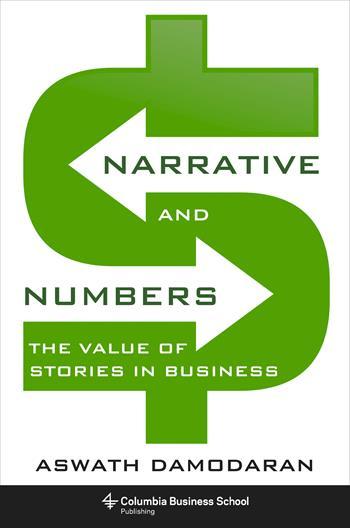
Exciting news! Professor Aswath Damodaran is out with a new book! Narrative and Numbers. The Value of Stories in Business has just been published by the Columbia Business School. As he explains in this post from his blog and on this presentation, he develops the valuation of four companies: Uber, Amazon, Alibaba and Ferrari. He is as interested about the story as it is conveyed by companies themselves as he is about the raw numbers. Here's Prof. Damodaran on his choices:

1. Uber, the ride-sharing phenomenon: I start with the story that I told about Uber in June 2014, and the resulting value, and how that story evolved over the next 15 months as I learned more about the company and its market/competition changed.

2. Amazon, the Field of Dreams Company: Amazon is a story stock that seems to defy the numbers laws and I use it to illustrate how the value for Amazon can vary as a function of the story you tell about it.

3. Alibaba, the China story: The China big market story has been used to justify the valuations of many companies, but Alibaba is one case where the use of that story is actually merited. In my story, Alibaba continues to dominate the growing Chinese online retail market and my value reflects that, but I also look at how that value will change if Alibaba can replicate its success globally (Alibaba, the Global Story).


4. Ferrari, the Exclusive Club: I value Ferrari as an exclusive club, leading into its IPO, and explore how that value will change if you assume that it will follow a different business model.


Reading Prof. Damodaran's book could be a very interesting undertaking for the Finance Club. Because Uber is still not a public company, I am pretty sure that the analysis will include 'bottom-up' beta calculations for the cost of equity. The Amazon story looks particularly interesting from a narrative point of view, as CEO Jeff Bezos has been incredibly spot-on. Alibaba would take us to the Chinese market (and the cost of capital calculations in the Chinese currency) while Ferrari is in a league of its own.
________________

THE ST. LOUIS FED FINANCIAL STRESS INDEX

AM | @agumack

Economists at the Federal Reserve Bank of St. Louis have developed a 'Financial Stress Index' designed to track signs of distress in financial markets. This is just one among many so-called financial conditions indexes (see the list of components here). 


The STLFSI measures the degree of financial stress in the markets and is constructed from 18 weekly data series: seven interest rate series, six yield spreads and five other indicators. Each of these variables captures some aspect of financial stress. Accordingly, as the level of financial stress in the economy changes, the data series are likely to move together.

We can build our own 'Financial Conditions Index' at the Finance Club. I would take some of the elements of the St. Louis Fed index, but I would give more weight to credit spreadsas opposed to the S&P500. In other words: it would look more like a credit/money market type of index. The idea is to track its behavior against stocks. I would include an FX component too, perhaps one the Fed's own dollar indexes. This is especially relevant in light of the interpretation of Germany's very low interest rates as a hedge against a eurozone breakup (*).

Also, I would include fixed-income ETFs, as we know that some investors are taking advantage of the liquidity in these instruments to hedge their positions, thereby reducing their reliance on the CDS market (which is more subject to regulations).

(*) Miles Johnson: "German bonds offer the best way to bet on a break-up of the euro", Financial Times, 10 January 2017.
___________________

Sunday, October 23, 2016

READINGS ...

AM | @agumack


"We're not making any idea that pops into his head" — Marcus Lemonis

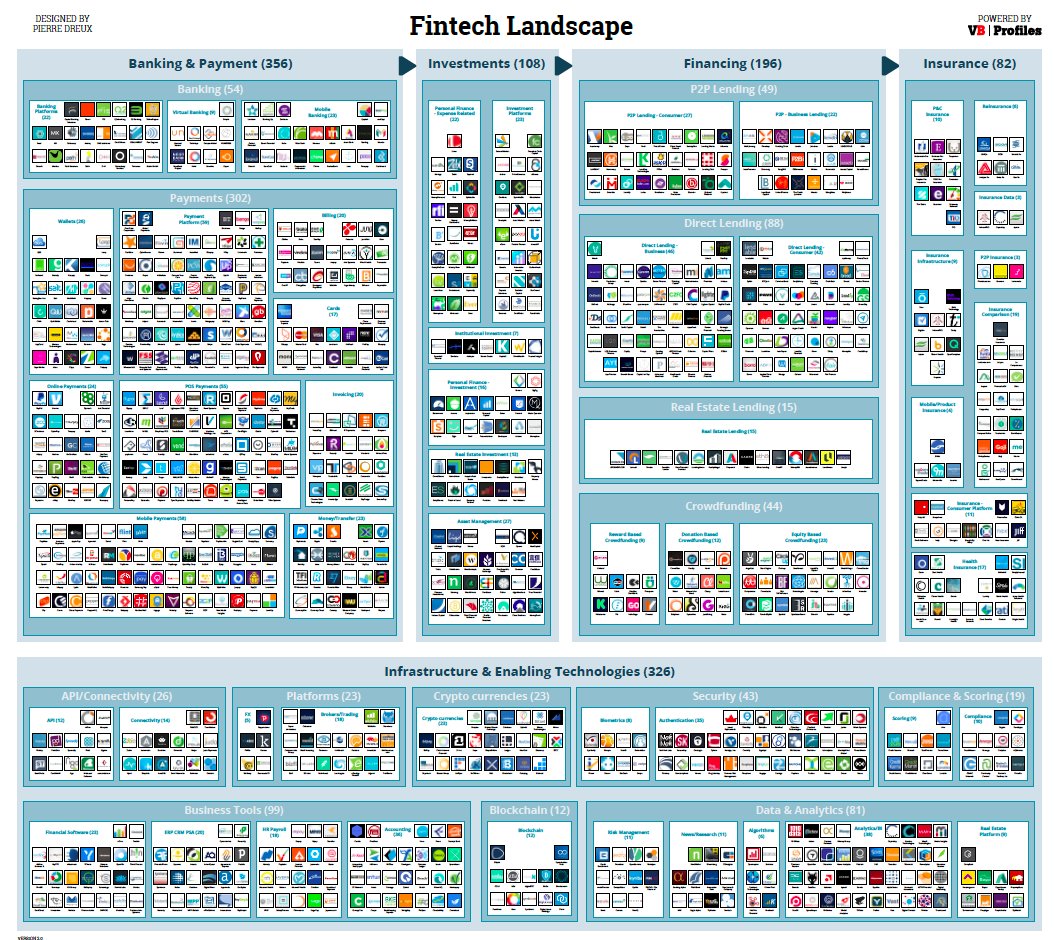
 . Fintech & securitization. Two interesting pieces on the role that Fintech could play in terms of securitizing loans to small businesses. "The idea of securitising loans to small and medium enterprises (SMEs), many of which are heavily reliant on bank lending in Europe, is particularly appealing ...  [The] new risks have to be weighed against the desperate need for credit in Europe" (*).

(*) Thomas Haile: "Does securitisation of online loans have a future in Europe?", Financial Times, 10 May 2016 and "Funding circle to tap securitisation market", Financial Times, 14 april 2016.
________________

. Inventory management at micro-caps. On CNBC.com, Marcus Lemonis gives some priceless advice on managing inventories at small businesses. "If you can't track what's selling or not selling, [then] you can't do any forecasting to build inventory. You can't even monitor trends or customer behavior. You have no shot at success" (*).

(*)  Zack Guzman: "The Profit' star Marcus Lemonis: Making these inventory mistakes could be disastrous", CNBC.com, 1 September 2016.
_______________

 . Bloomberg & Brexit. Well done Bloomberg! There is now a Bloomberg Twitter account that provides "Full coverage of Britain’s exit from the EU, by @business teams in London, Brussels and around the continent" (*). Very usefull indeed!

(*) @Brexit
________________

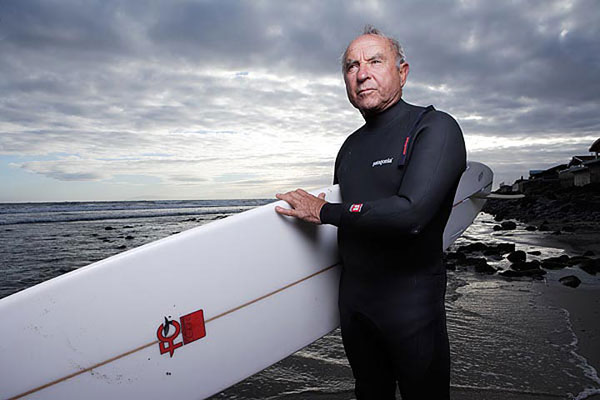
. Chouinard on Venture capitalists. "Venture capitalists are such assholes", says Yvon Chouinard, the founder of Patagonia, as he briefly discusses the case of Diamond Equipment in a captivating piece by Nick Paugartner for The New Yorker (*). By the way, Prof. Damodaran has two recent pieces on VCs: a blog post under the title "Venture capitalists don’t value companies, they price them" [see], and a VIDEO [see].

(*) Nick Paumgartner: "Patagonia's philospher-king", The New Yorker, September 19, 2016.
________________

. Paul Krugman: Brexit and the Pound. Paul Krugman on the weakness of the pound: "We face the prospect of seriously increased transaction costs between Britain and the rest of Europe, which creates an incentive to move those services away from the smaller economy (Britain) and into the larger (Europe). Britain therefore needs a weaker currency to offset this adverse impact" (*).

(*) Paul Krugman: "Notes on Brexit and the Pound", The Conscience of a Liberal, October 11, 2016.
_______________

. Vladimir Putin. The Economist is out with a special report on what it calls "Putinism". The gist: "Institutions that would underpin a prosperous Russia, such as the rule of law, free media, democracy and open competition, pose an existential threat to Mr Putin’s rotten state." I think I'm going to buy this one (*).

(*) "The threat from Russia", The Economist, 22 October 2016.
________________

Monday, October 17, 2016

UPDATING SOME VERY IMPORTANT DATA ...

AM | @agumack

When governments and companies are able to sell bonds in their own currencies, it means that the quality of governance is improving. You can have enormous amounts of local-currency debt, but the source might be state-onwed banks (like in China). Alternatively, governments and companies can issue large amounts of bonds ... in US dollars (or euros). That is why I take the ability to issue local-currency bonds as the litmus test of the quality of governance. I want to thank Prof. John D. Burger at the Sellinger School of Business (Loyola University Maryland) for sending me the revised calculations of the stock of local currency bonds in terms of GDP for a number of countries [1]. The new calculations update the data from one of my favorite articles, published in 2006 [2].

                                                              * * *

Speaking of local-currency bonds, there are some interesting news coming from Argentina: the government has just issued a 10-year bond in pesos. While the yield looks pretty high (15.5%), it shows the impact of renewed confidence in the ability of the Argentinean central bank to deal with the country's perennial inflation problem [3].

[1] John D. Burger, Rajeswari Sengupta, Francis E. Warnock, Vernica Cacdac Warnok: "Us Investment in Global Bonds: As the Fed Pushes, Some EMEs Pull", Economic Policy, October 2015.

[2] John D. Burger & Francis E. Warnock: “Local Currency Bond Markets”, IMF Staff Papers, Vol. 53, 2006. This is one of the most striking findings from the paper: "To gauge the importance of various factors, our estimates in column 1 of Table 3 imply that (other things being equal) if Brazil had Denmark’s rule of law, its bond market as a share of GDP would be 43 percentage points higher"

[3] Nicolás Dujovne: "Menos inflación y crédito más barato, claves del porvenir", La Nación, 17 October 2016.
_____________________

Thursday, September 29, 2016

WELLS FARGO: THE ETHICS ANGLE

AM | @agumack


The (ongoing) Wells Fargo story is just a gold mine from the perspective of a course on Ethics in the Financial World, which I will be teaching in the Fall Semester. I using this post to collect the necessary information. Ideas for debate and conclusions will follow in futher posts.

- General information. A timeline of the Wells Fargo scandal [see].

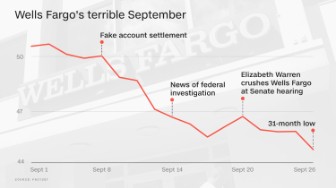
. On September 8, 2016, the alleged misconduct was revealed when the Consumer Financial Protection Bureau (CFPB), the Los Angeles City Attorney and the Office of the Comptroller of the Currency (OCC) fined the bank $185 million, alleging that more than 2 million bank accounts or credit cards were opened or applied for without customers' knowledge or permission between May 2011 and July 201 [see].

. "In his testimony, Mr. Stumpf gave details about steps the bank has taken to address the problems and to regain customers’ trust. He said that starting in 2013, the bank analyzed questionable behavior related to account openings at its branches and strengthened internal oversight to fix the problems uncovered. The company had already said, following the announcement of the enforcement action, that it was eliminating sales goals for retail bankers for all products. “We should have done more sooner to eliminate unethical conduct and unintended incentives for that conduct to occur,” Mr. Stumpf said. (20 September 2016)" [see; includes VIDEO].

- Reputational risk. Compare the amount of the fines imposed to the loss in market capitalization.

. Bigcharts price quote [see]. Ticker symbol: WFC. Number of shares outstanding: 5.046 billion [see]


- Cost of capital/cost of funding. Credit rating agencies have reacted to the news.

. "Moody's did not signal it would review Wells Fargo's current rating, but said it expects "some immediate damage to Wells Fargo's reputation from this embarrassing episode." However, the Moody's note said Wells Fargo will eventually have a "more durable sales and marketing model" due to expected changes to its sales practices and incentive structures" [see]

. Fitch lowers Wells Fargo's credit outlook to negative: "The outlook revision reflects potential damage to the firm’s franchise and earnings profile following recent regulatory actions regarding improper unauthorized account openings, Fitch said Tuesday in a statement. Fitch reaffirmed the San Francisco-based lender’s rating of AA-/F1+. The ratings company said that even as “customer damages appear limited," the scandal could pressure the bank’s earnings. While WFC emerged from the financial crisis in a much better position than similarly sized peers, Fitch believes this issue creates reputational risk given the issue and allegations are understandable to the general public, in a way that misdeeds at other banks are not, Fitch said, using the lender’s stock symbol [see].

- Clawbacks. Executives have agreed to forfeit part of their pay. Note: it's the Board of Directors, led by its independent members,

. "In seeking to defuse the firestorm over its sham accounts, Wells Fargo & Co.’s board turned to an old, but obscure gambit – getting its top leader to pay up. John Stumpf, the bank's chairman and CEO, will forfeit about $41 million of unvested stock awards and forgo his salary while the company investigates its retail banking sales practices. Carrie Tolstedt, Wells Fargo's former head of community banking, also will forgo her unvested equity stock awards, valued at $19 million, and will not receive retirement benefits worth millions more. Neither Tolstedt nor Stumpf will receive 2016 bonuses. Under the leadership of Stumpf and Tolstedt, hundreds of thousands of sham accounts were opened by employees to meet their sales targets, enraging the customers and triggering ongoing federal investigation. And the bank may not be done with "clawing back" -- as the practice is often called -- the executives' pay. “The independent members of the board will take such other actions as they collectively deem appropriate, which may include further compensation actions,” Stephen Sanger, Wells Fargo’s lead independent director, said Tuesday in a statement" [see].

- Corporate governance. Activist investors push for a shake-up at the top.

. "Banking industry scandals and problems have put a focus on the combined chairman and chief executive role in the past. In 2009, when Bank of America’s Ken Lewis was under fire for his handling of the acquisition of Merrill Lynch, investors voted to separate the roles, in effect stripping him of the chairmanship. Jamie Dimon of JPMorgan Chase defeated proposals to strip him of one of the roles in the wake of the “London whale” trading fiasco. Earlier this year, 17 per cent of Wells shareholders backed Mr Armstrong’s proposal for an independent chairman, the highest level of support since 2013. The activist has presented the proposal for an independent chairman each year since 2012" [see]


- Whistleblowers. Did Wells Fargo fire the whistleblowers?

. "CNN Money has found multiple whistleblowers from Wells Fargo who were willing to go on the record and report that they were fired in retaliation for coming forward to report the massive fraud in which Wells Fargo employees opened up 2,000,000 fake accounts in their customers' names, raiding their real accounts to open them, then racking up fees and penalties, and trashing their customers' credit ratings.CNN also spoke to a former Wells Fargo HR manager who explained how the retaliatory firings worked: employees who blew the whistle would be monitored closely for minor infractions (e.g. being two minutes late for work), then fired "with cause."[see]
__________________

FINTECH


Monday, September 26, 2016

DOCUMENTS: STANDARD & POO'S 'INSITUTIONAL' CRITERIA FOR SOVEREIGN RISK

AM | @agumack

The material from this post (including the tables) comes from Standard & Poor's document Sovereign Credit Methodology, published in December 2014. Note the importance attached to the notion of checks and balances. For an attempt at measuring the strength of checks and balances worldwide, I have proposed an Index of Checks and Balances in my other blog (in Spanish). You can see it here. Broadly speaking, 'checks and balances' refers to the distribution of political power within a nation. Nobody denies the need for a strong executive power, but that strength should be (at least partially) balanced by the existence of other political institutions that are independent for that power. The legislative and the judiciary obviously come to mind, althought in some well-run parliamentary democracies, the executive is taken from members of the legislative body itself. This is why, in my own index, I give paramount importance to survey-based measures of judicial independence. My index also gives some weight to central bank independence—but this a matter to be discussed separately.

Material for Standard & Poor's
The sovereign rating methodology (we use "criteria" and "methodology" interchangeably here) addresses the factors that affect a sovereign government's willingness and ability to service its debt on time and in full. The analysis focuses on a sovereign's performance over past economic and political cycles as well as on factors that indicate greater or lesser economic policy flexibility in future economic cycles. The five key factors that form the foundation of our sovereign credit analysis are:
Institutional and governance effectiveness and security risks (reflected in the institutional assessment).

. Economic structure and growth prospects (economic assessment).

. External liquidity and international investment position (external assessment).

. Fiscal performance and flexibility as well as debt burden (fiscal assessment).

. Monetary flexibility (monetary assessment).

The institutional and economic profile reflects our view of the resilience of a country's economy, the strength and stability of its civil institutions, and the effectiveness of its policymaking. It is the average of the institutional assessment (see Paragraphs 30-42) and the economic assessment (see Paragraphs 43-53). Very high institutional risk and high debt burden. A sovereign with an institutional assessment of '6' cannot be rated higher than 'BB+', regardless of any potential upward adjustment for a large asset position (see Paragraph 25). The track record of sovereign defaults suggests that institutional risks are among the main causes of the poor economic policies that lead to default, which is why the institutional assessment receives this particular weight. A sovereign with an institutional assessment of '6' and a debt assessment of '5' or '6' (see Table 7) cannot be rated higher than 'B+', given the heightened risks such a combination entails. The institutional assessment comprises an analysis of how a government's institutions and policymaking affect a sovereign's credit fundamentals by delivering sustainable public finances, promoting balanced economic growth, and responding to economic or political shocks. The institutional assessment captures these factors:

. The effectiveness, stability, and predictability of the sovereign's policymaking and political institutions (primary factor).

. The transparency and accountability of institutions, data, and processes as well as the coverage and reliability of statistical information (secondary factor).

. The sovereign's debt payment culture (potential adjustment factor).

. External security risks (potential adjustment factor).


Effectiveness, stability, and predictability of policymaking, political institutions, and civil society. The criteria analyze the effectiveness, stability, and predictability of policymaking, political institutions, and civil society based on:

. The track record of a sovereign in managing past political, economic, and financial sector crises; maintaining prudent policymaking; and delivering balanced economic growth. This includes a timely implementation of various reforms (such as to health care or pensions, to ensure sustainable public-sector finances over the long term), prudent monetary policy management, and effective management of external pressures.

. The predictability in the overall policy framework and developments that may affect policy responses to a future crisis or lead to significant policy shifts.

. Actual or potential challenges to political institutions, possibly involving domestic conflict, from popular demands for increased political or economic participation, or from significant challenges to the legitimacy of institutions on ethnic, religious, or political grounds.

. The cohesiveness of civil society, as evidenced by social mobility, social inclusion, prevalence of civic organizations, degree of social order, and capacity of political institutions to respond to societal priorities.

Effective policymaking and stable political institutions enable governments to address periods of economic distress and take measures to correct imbalances. This helps sustain long-term growth prospects and limit the risk of sharp deterioration of a sovereign's creditworthiness. Stable and well-established institutions generally ensure a certain degree of predictability in the general direction of policymaking, even when political power shifts between competing parties and policy details change as a result. Conversely, succession risks, a high concentration of power, and potential or actual challenges to political institutions are factors that can pose risks to institutional stability and, in turn, lead to substantial policy shifts and affect the continuity of key credit characteristics. The analysis of the risk of challenges to political institutions is based on the history of internal political conflicts, including extra-constitutional changes of government.

The accountability and transparency of institutions, data, and processes are based on the analysis of the following:

. The existence of checks and balances between institutions.

. The perceived level of corruption in the country, which correlates strongly with the accountability of its institutions.

. The unbiased enforcement of contracts and respect for the rule of law (especially in the area of property rights), which correlates closely with respect for creditors' and investors' interests.

. The independence of statistical offices and the media, as well as the history of data revisions or data gaps, as measures of the transparency and reliability of the information.

The transparency and accountability of institutions bear directly on sovereign creditworthiness because they reinforce the stability and predictability of both political institutions and the political framework. They do this even though they may not reinforce the stability of a ruling political class or party. In addition, transparent and accountable institutions, processes, and data are important because they enhance the reliability and accuracy of information and help make known in a timely manner any significant shifts in a country's policymaking or the occurrence of risks relevant to sovereign credit risk.
________________________

Document. Standard & Poor's downgrades Poland (January 2016) [see]

This is the part of the statement that refers to political institutions.

The downgrade reflects our view that Poland's system of institutional checks and balances has been eroded significantly as the independence and effectiveness of key institutions, such as the constitutional court and public broadcasting, is being weakened by various legislative measures initiated since the October 2015 election. Poland's new ruling party Law and Justice (PiS), which holds an absolute majority in the parliament (Sejm) and the senate, has set out to make fundamental changes to Poland's institutions. For example, the constitutional court's ability to work efficiently and independently will likely be undermined, in our view, by changes to the court's composition and decision-making process. The government's new media law, as another example, gives the government extensive powers to appoint and control the directors and supervisory boards of public broadcasters. A third law terminates contracts of all current senior, career civil servants and removes a constraint regarding previous party membership, therefore enabling the new government to change the structure of the civil service. In our view, these measures erode the strength of Poland's institutions and go beyond what we had anticipated regarding policy changes from the general election.
___________________

Document. Standard & Poor's downgrades Saudi Arabia (October 2015) [see]

This is a reference to Saudi politics:

We analyze Saudi Arabia as an absolute monarchy in which decision-making resides with the king and the ruling family. In our view, reconciling intrafamily issues around sucession could make the kingdom's policy decisions more challenging and difficult to predict. Two new councils, the Council for Political and Security Affairs and the Council for Economic and Development Affairs, have been created to form government policy more efficiently. Power is devolved to the crown prince and deputy crown prince, who respectively head these two bodies. The king approves the decisions of the councils. Broader institutional checks and balances are still at early stages of development.
____________________

Document. Standard & Poor's downgrades Russia Foreign Credit Rating (January 2015 [see]

This is a reference to Russian institutions:

We view Russia's institutional and governance effectiveness as a rating weakness. Political power is highly centralized with few checks and balances, in our opinion. We do not currently expect that the government will be able to effectively tackle the long-standing structural obstacles (perceived corruption, the weak rule of law, the state's pervasive role in the economy, and the challenging business and investment climate) to stronger economic growth over our 2015-2018 forecast horizon.
___________________

Saturday, June 18, 2016

PROF. DAMODARAN ON 'BOTTOM-UP BETAS'

AM | @Mackfinance

"I'm actually wedded to bottom-up betas" — Aswath Damodaran

I have recently decided to devote more attention in class to what Prof. Damodaran calls 'bottom-up' betas. Students seem to find it interesting too. Here's some video material with the explanations:


1. Identify the business or businesses that make up the firm whose beta we are trying to estimate.

2. Calculate the levered betas of other publicly traded firms that are primarily or only in each of those businesses. Use regression analysis. In most businesses, there are at least a few comparable firms and in some businesses, there can be hundreds. Begin with a narrow definition of comparable firms, and widen it if the number of comparable firms is too small. Consider the possibilities of widening your search globally to get more firms in your sample. Do hundreds of regression! [TABLE]

3. Calculate the average of levered betas for each relevant sector.

4. Use the average debt-to-equity ratio (D/E) for each sector [this information will be provided] to ‘unlever’ the average beta with the formula: βU = βL / [ 1 + (1 – t) (D/E)]. This is the average unlevered beta for each division.

5. Calculate the bottom-up unlevered beta of the firm as a weighted-average of the unlevered betas for each division. But what weights do we use? There are two possibilities: use the proportion of the enterprise value of the businesses relative to the total enterprise value of the firm (enterprise value = market value of debt + market value of equity – cash). Or you could just use the revenues (sales) by sector.

6. Use the debt-to-equity ratio of the company to arrive at the levered beta, using the formula: βL = βU [ 1 + (1 – t) (D/E)]. That’s it!
_______________

Monday, February 15, 2016

LEHMAN BROTHERS & THE EFFICIENT MARKETS HYPOTHESIS

AM | @Mackfinance

"A generalised mutual suspicion" — John Plender

There is a new book out on the Lehman Brothers crisis. The author is Oonagh McDonald. There is much praise for the book from the Financial Times' reviewer John Plender, although he complains about MacDonald's "harshness based on hindsight" (*). The most interesting part comes from the critique of the Efficient Markets Hypothesis:

MacDonald examines how, one weekend in September, Lehman went from being valued by the stock market at $639bn to being worth nothing at all. It did not require much to make Lehman go up in smoke. At the end of its last financial year, it was so highly leveraged that its assets had only to fall in value by 3.6 per cent for the bank to be wiped out. The response of these Wall Street wizards to the credit crunch that began in mid-2007 was pure hubris. Having survived episodes of financial turmoil when many expected the bank to fail, Mr Fuld and his colleagues decided to take on more risk. Meanwhile, they neglected to inform the board that they were exceeding their self-imposed risk limits and excluding more racy assets from internal stress tests.

The board, conspicuously short of expertise in risk management and financial plumbing, enthusiastically endorsed the policy. A strength of McDonagh’s book is that it recognises that this was really a property-based crisis. Much of the decline in the value of Lehman’s assets came from direct exposure to property. Because Lehman brought other banks into these transactions, word about the deterioration in the quality of its assets quickly spread. A generalised mutual suspicion about the value of other banks’ assets became a hallmark of the crisis. 

But the conclusion is a broader, provocative exploration of the concept of market value, in which McDonald tilts at the efficient market hypothesis that underlay much of the thinking in finance ministries, central banks and regulatory bodies before the crisis. This incorporates the notion that competition between market participants will ensure that prices reflect all publicly available information. It leads to the conclusion that bubbles do not exist, which in light of the crisis many find absurd.

(*) John Plender: "Lehman Brothers crisis: A crisis of value. By Oonagh McDonald", Financial Times, 15 February 2016.
______________

Sunday, February 14, 2016

SOME ARTICLES ON BASEL, SYTEMIC RISK

AM | @Mackfinance

"A large range of uncertainty" — The Bank of England

. John Vickers: "The Bank of England must think again on systemic risk", Financial Times, 14 February 2016.
______________

Saturday, February 13, 2016

NOW EVERYBODY TALKS ABOUT THE YIELD CURVE!

AM | @Mackfinance

"Curve inversion will come quickly" — Harvinder Sian

The yield curve, one of our favorite indicators, is making an astonishing comeback. Now everybody seems to talk about it! Here are some links to recent articles on the yield curve.

. Robin Wigglesworth: “Yield curve recession indicator sends warning on US economy”, Financial Times, 13 February 2016.

. Robin Wigglesworth: “US yield curve narrows to 8-year low”, Financial Times, 10 February 2016

. Bloomberg: “Citigroup: The Best Predictor of a U.S. Recession Will Resurface Sooner Than You Might”, 2 December, 2015

. Dean Croushore & Katherine Marsten: “The Continuing Power of the Yield Spread in Forecasting Recessions”, Federal Reserve Bank of Philadelphia, Research Paper No. 14-5, February 2014


_______________

Friday, February 12, 2016

BUSINESS TO BUSINESS IN ASSET MANAGEMENT: INDEX PROVIDERS

AM | @Mackfinance

"Profits generated by index providers have risen significantly" — Chris Flood

. Chris Flood: "Profiting from passive aggression", Financial Times, 16 November 2015.
_______________

THE ETF REVOLUTION: SOME NUMBERS

AM | @Mackfinance

"The growth is scary" — Anonymous ETF provider

. New record. The ETF market has set a new record for global asset gathering (inflows): some $372bn for 2015. In December alone, ETFs posted net inflows of $55bn, marking the 23rd consecutive month of positive net flows, according to research firm ETFGI. Over the past five years, the inflows reach $1.5tn after growing dissatisfaction with the high fees and widespread underperformance of actively managed traditional mutual funds.

. Total ETF assets. Total assets stand at $2.99tn—a figure consultancy PwC expects to hits $5tn by 2020.

. The Big Three. BlackRock, Vanguard and State Street Global Advisors together control more than two-thirds of the ETF industry's global assets and in 2015 grabbed 55% of the new cash allocated by investors to ETFs, according to ETFGI.

. Others. Some of the notable beneficiaries of investors' growing interest in ETFs include WisdomTree and Deutsche Asset Management, which both saw inflows to ETFs more than triple in 2015 compared to the previous year.

. Minimum size. ETFGI estimates that more than 6,100 ETFs are now available to investors globally, but around 70 per cent of those funds have less than $100m in assets, the minimum level generally regarded as necessary to break even.

. Innovation. Providers have to strive to be different. It is vital to have the right products in an increasingly crowded market place, to build ETFs that meet specific client needs. WisdomTree, the New York based manager, runs a pair of currency hedged European and Japanese equity ETFs that were two of the fastest growing products globally in 2015.

. Japan. Figures released by the Japan Exchange Group in February 2016 put the combined January trading value of all ETFs at record Y7.94tna 100% increase on the same period last year and a 53.4% month-on-month rise from December 2015. The increase in ETF traded volume was even more marked, jumping 128% year-on-year. (Note the role of the BoJ).


 Sources. ETFGI; PwC: "ETF 2020: Preparing for a new horizon"; Leo Lewis: "ETFs set Japan record", Financial Times, 3 February 2016; Chris Newlands: "Is it time to halt the rise of the ETF machine?" and Chris Flood: "Dominance of big three forces wave of innovation", Financial Times, 1 February 2016.
________________

PASSIVE ASSET MANAGEMENT: SOME NUMBERS

 AM | @Mackfinance

"The rise of passive managers continues unabated" — John Authers

Most active fund managers do not beat their benchmarks: nine out of ten actively managed European equity funds failed to reach their performance goals over the last decade. In the US, around 80% of large-cap equity managers fell short of their index targets over the same period. These statistics have helped fuel inflows into index-tracking funds, including Exchange Traded Funds (ETFs).

. In the US, 32.4% of long-term funds' assets are managed passively, with $4.52tn under management, against $9.44tn managed actively. The share has roughly tripled since 1998.

. In 2015. Within equities, $169bn flowed out of actively managed funds, with $102bn of that finding its way to passive managers.

. In 2015. Vanguard pulled in $221bn, while BlackRock, including the iShares division, took in $103bn. Most of the traditional active managers suffered big outflows.

. Most funds are actively-managed. Only 15% of fund assets globally are managed passively, but there is an accumulation of data showing that investors face disappointment with active managers.

. Massive under-performance in emerging markets. Fewer than one in five UK small-cap and sterling-denominated emerging market fund managers beat their benchmarks over 10 years. Almost 98 per cent of euro-denominated emerging market funds underperformed over the same period. Fewer than half of the 489 UK equity funds and 1,192 European equity funds that were launched 10 years ago have managed to survive.

Sources. John Authers: "Passive asset managers are good corporate stewarts", Financial Times (21 January 2016); Chris Flood: "Nine out of ten active funds underperform benchmark", Financial Times (25 October 2015).
______________

THE ECONOMIST ON EUROPEAN BANKS

AM | @Mackfinance

The Economist argues that US banks have cyclical problems, but European banks have structural ones. This is the article:

FOR those who worry that a repeat of the crisis of 2007-08 is imminent, this week brought fresh omens. Shares of big banks tumbled; despite a mid-week rally, American lenders are down by 19% this year, European ones by 24% . The cost of insuring banks’ debts against default rose sharply, especially in Europe. The boss of Deutsche Bank felt obliged to declare that the institution he runs is “absolutely rock solid”; Germany’s finance minister professed to have no concerns (thereby adding to the concerns). This is not 2008: big banks are not about to topple. But there are reasons to worry, and many of them converge on one country.

Start with the better news. Banks are more strongly capitalised than they were. Even in Europe, where lenders have been slower than their American counterparts to raise capital, banks have plumped up their core equity cushions from an average of 9% in 2009 to 12.5% in 2015. Managers at European banks are making a renewed effort to adjust to the post-crisis landscape. New rules on everything from capital to liquidity are forcing them to change. John Cryan, Deutsche’s newish co-chief executive, was brought in to trim its investment bank. He is jettisoning whole divisions, and suspended the dividend this year and last. Credit Suisse is undergoing similar surgery. Just now, this is weighing on the banks’ share prices. Yet, however painful for investors, the sensible goal is ultimately to create slimmer, safer, more profitable outfits.

Also salutary, if painful, is how investors in bank debt are coming to understand that they bear greater risk than they did. New European rules that came fully into force at the start of this year stipulate that troubled banks must deal with capital shortfalls by “bailing in” holders of bank bonds before any call is made on the taxpayer. The chance that bondholders might lose money suddenly seems more real. The turmoil at Deutsche this week stemmed partly from fear that the bank might struggle to pay interest next year on a type of bond that is designed to act as a buffer in a crisis. There are some design flaws in the bail-in regime, but the possibility that European banks are at last repairing themselves at a cost to their investors is the silver lining to this week’s spasms.

The clouds, alas, still loom. One source of anxiety is the health of the world economy. The factors that spook markets more broadly—the slowdown in China, plunging commodity prices and indebted energy firms, political upheaval from Greece to New Hampshire—all weigh heavily on banks in particular. Banks do well when the economies they serve are growing, and miserably when they are not. The receding prospect of higher interest rates leaves American banks with less hope of widening the margin between the rates they pay depositors and what they charge for loans. In Japan, where bank shares have fallen by 24% this month, and Europe central banks have imposed negative rates, in effect levying a fee on some reserves—one that banks have not yet been able to pass on to depositors. With the economic outlook growing gloomier, margins being squeezed and restructuring costs still hitting profits, investors have good reason to fret.

Worse, some countries appear to have taken so long to deal with their banks that they will now struggle to clean them up at all. The IMF reckons that the total amount of non-performing debt in Europe was around €1 trillion ($1.13 trillion) at the end of 2014. Bail-in is an especially ugly prospect in countries where bank debt is owned not only by diversified financial institutions but also by local retail investors. Under such conditions, politicians may find that they cannot force the cost of cleaning up balance-sheets on voters without causing uproar.

Rome is where the hurt is

No country is more impaled on this dilemma than Italy. The gross value of non-performing loans makes up a whopping 18% of their total lending; retail investors own some €200 billion of bank bonds, equivalent to 12% of GDP. A government plan to buy bad debts from the banks at close to face value would fall foul of European rules against “state aid”. But selling the loans at a significant discount would force Italian banks to recognise losses, some of which could be borne by retail investors. The prime minister, Matteo Renzi, headed down this road late last year, when the efforts to save four small banks clobbered the savings of individual Italians and seemingly resulted in a high-profile suicide. He will not want to do so again.

The European Union and the Italian government recently agreed on a half-baked alternative to bail-in, though few think it will cleanse banks’ balance-sheets. Instead Italy seems trapped between the rock of hurting small savers and the hard place of a banking system strangled by bad debts. If Mr Renzi cannot negotiate his way round the new rules on bail-in, Italy’s banks and economy risk years of more stagnation, poisoning relations with the EU. Behind this week’s banking headlines is the threat of something very bad coming out of Italy.

_________________

Saturday, February 6, 2016

SUPER-BOWL ADS: DATA POINTS

AM | @Mackfinance

"Adverstisers should consider doing strong digital marketing during that period" — Anne Lewnes

There is a guaranteed, built-in audience that will be not only watching the game, but talking about the advertising. Consumers recognise that, historically, advertisers have upped their game during the Super Bowl, that they will pull out all the stops to try to entertain them and that they’ll get to see something new. This year 40 brands will be doing just that, having bought airtime from CBS for a slot in Super Bowl 50 and they will all be jostling for the public’s attention. “Culturally, the Super Bowl may be the one time a year when advertisers are actually invited to the family rooms of American households. Ads become central.

Consumers knows the ads will be new and entertaining and also understand the high costs for each commercial creating added interest,” added Bill Tucker, executive vice president at the Association. “The Super Bowl serves as the centre of gravity and grand finale of extensive integrated cross platform marketing programs that includes promotion, in store marketing, advertising and social buzz with huge extensions leading up to the game. The return on investment continues to be heavily analysed by advertisers and is paying off for them.”

Some data points about Super-Bowl ads (*):

. $10 million for one minute. When is 30 seconds worth $5m? That is the question facing Super Bowl advertisers as they gear up for February 7, the biggest day in US marketing. The price tag that broadcaster CBS is charging for a television commercial for this year’s National Football League championship game is double the average $2.5m price a decade ago, according to Kantar Media.

. $5.9bn spent. According to Advertising Age companies have spent $5.9 billion on commercials since the first Super Bowl in 1967.

. 110 million viewers expected. Last year’s clash, where the New England Patriots snatched victory at the death from the Seattle Seahawks, attracted the biggest television audience in American history, 114.4 million viewers and was watched in 71 per cent of homes. By the time of the winning touchdown, there were more than 120 million people glued to their screens.
 

. 114 million viewers in 2015. But the game regularly breaks US TV viewing records, with 114m people tuning in last year. This Sunday’s pie will be even bigger, as CBS will for the first time make its livestream of the game and all national commercials available over internet TV boxes including Apple TV and Roku. Advertisers are already teasing their ads well before game day, using digital channels to extend their reach.

. 14 million hours of Super-Bowl ads. YouTube touts its metrics which show that advertisers that put up their ads early on its AdBlitz site get twice the views and three times the social shares as those that wait to release their ads during the game. Last year, people watched 14m hours of Super Bowl ads on YouTube, with 60 per cent of viewers tuning in on mobile phones. “We have stopped thinking about the Super Bowl as a one-day event. Our campaign starts when the NFL season starts,” says Ram Krishnan, chief marketing officer at PepsiCo’s Frito-Lay, maker of Doritos and other snacks.

. 60% jump in website traffic. Adobe, the software maker, estimates that brands that advertise during the Super Bowl see traffic to their websites jump more than 60 per cent, a boost that can last for more than three weeks after the game.

. 25 days of viral afterlife. “Advertisers should consider doing strong digital marketing in that period,” says Ann Lewnes, chief marketing officer. The most popular Super Bowl ads have a viral afterlife on social media that lasts on average 25 days, she added.


(*) Shannon Bond: "Super Bowl ads capitalise on bumper day with new angles", Financial Times, 6-7 February 2016. David Millward: "Superbowl: the biggest advertising show of all", The Telegraph, 7 February 2016.
_____________

SUPER-BOWL ADS: U2 & BANK OF AMERICA

AM | @Mackfinance

"An example of creative capitalism" — Bill Gates

A sign of the times: between 2008 and 2013 there was not a single Super-Bowl ad from a financial services companies. In 2015, US insurer Nationwide was the second-most mentioned brand on Twitter during the game, according to Salesforce Marketing Cloud. But three-quarters of those conversations were negative as viewers vented their disgust with Nationwide's ad about a dead child, and the insurer had to issue an apology. The company is sitting out this year's game.


The 2014 ad from BankofAmericaMerrill Lynch is particularly interesting; it is about cause marketing or cause sponsorship. As such, it contains no information at all about financial services. This is from the Financial Times in early 2014 [1]:


The BoA ad will declare that for 24 hours everyone can download a new song from U2, ‘Invisible’, for free. The bank will then donate $1 for every download to a global fund to fight Aids, organized in association with Red, the philanthropic group co-founded by Bono. This comes on top of a $10m ‘simple’ donation from BoA. Brian Mynihan: ‘This is an advdertisement but it’s not really an ad … The aim is to create heat and energy’. Banks such as BoA have strong motives to ‘engage’ in innovative ways. A poll by Edelman, the public relations company, suggests that half of all consumers distrust banks.

The philanthropic sector is under pressure to become more innovative too. Government aid budgets are being cut and the attention span of consumers –or donors- is becoming more fickle. Of course this approach is not without risks for both sides. Bono, for example, admits that U2 was initially wary about embracing a bank. Bono: ‘When we looked at BoA and go to know Mr. Moynihan, we saw that values were important to them and they were trying to compensate for the financial mess’. There are more rumors at Davos that more deals are being discussed.


Recently, the FT came back to this topic with a Bono interview about 'conscious consumerism':

It is a decade since the star went to the WEF to launch Red, the brand campaign that began with the aim of ending the transmission of HIV/Aids from pregnant women to their unborn children. Described by Bill Gates as an example of “creative capitalism”, Red’s early partners included Starbucks, Apple and Nike, which made products under the Red brand and donated proceeds to the fight against Aids in Africa. The campaign has over the past 10 years raised more than $350m. “Corporate social responsibility is a phrase that is in common usage now but it wasn’t back then,” Bono says, speaking to the Financial Times on the telephone from “bubblin’ Dublin”, the day before flying to Davos.

An aim of Red, which he dreamt up with Bobby Shriver, a US lawyer and nephew of John F Kennedy, was to engage companies, and their customers and employees, in the fight against Aids, encouraging them to make and market Red-branded products, rather than just write a cheque. “Red understood early on that corporate social responsibility was not just for how companies gave their money but also for how companies make money.” Now, the challenge facing Bono and Red is the next decade. New partners have signed up, notably Bank of America, which in 2014 pledged $10m to Red, donating $1 for every free copy of the U2 track “Invisible” downloaded the day of that year’s Super Bowl. The bank recently pledged another $10m and has embarked on initiatives that include displaying at its ATMs images shot by the photographer Rankin of HIV-positive mothers and their children, who were born HIV-free thanks to their mothers taking antiretroviral medication.

“If we can get these drugs consistently into the hands of these mothers they will not transmit [the disease] to their children and we can cut off its growth,” says Brian Moynihan, Bank of America’s chief executive. Bono says the money Red has generated is “critical to the people whose lives it is saving”. As important, he says, “is the heat, the excitement”, the campaign has generated in terms of enlightening people who may never have thought twice about the Aids epidemic. “You can go to a Bank of America ATM now in Toledo, Ohio, and see a picture of children born without Aids because of Red. That has an effect.”


[1] Gillian Tett: “How Bono and B0fA made sweet music”, Financial Times, January 31, 2014. Note that the article appears in the very same issue of the FT where BofA’s $8.5bn settlement is discussed! 

[2] Matthew Garrahan: "Bono surveys a Red decade of conscious consumerism", Financial Times, 21 January 2016.
______________