Showing posts with label Securitization. Show all posts

Sunday, October 23, 2016

READINGS ...

AM | @agumack


"We're not making any idea that pops into his head" — Marcus Lemonis

 . Fintech & securitization. Two interesting pieces on the role that Fintech could play in terms of securitizing loans to small businesses. "The idea of securitising loans to small and medium enterprises (SMEs), many of which are heavily reliant on bank lending in Europe, is particularly appealing ...  [The] new risks have to be weighed against the desperate need for credit in Europe" (*).

(*) Thomas Haile: "Does securitisation of online loans have a future in Europe?", Financial Times, 10 May 2016 and "Funding circle to tap securitisation market", Financial Times, 14 april 2016.
________________

. Inventory management at micro-caps. On CNBC.com, Marcus Lemonis gives some priceless advice on managing inventories at small businesses. "If you can't track what's selling or not selling, [then] you can't do any forecasting to build inventory. You can't even monitor trends or customer behavior. You have no shot at success" (*).

(*)  Zack Guzman: "The Profit' star Marcus Lemonis: Making these inventory mistakes could be disastrous", CNBC.com, 1 September 2016.
_______________

 . Bloomberg & Brexit. Well done Bloomberg! There is now a Bloomberg Twitter account that provides "Full coverage of Britain’s exit from the EU, by @business teams in London, Brussels and around the continent" (*). Very usefull indeed!

(*) @Brexit
________________

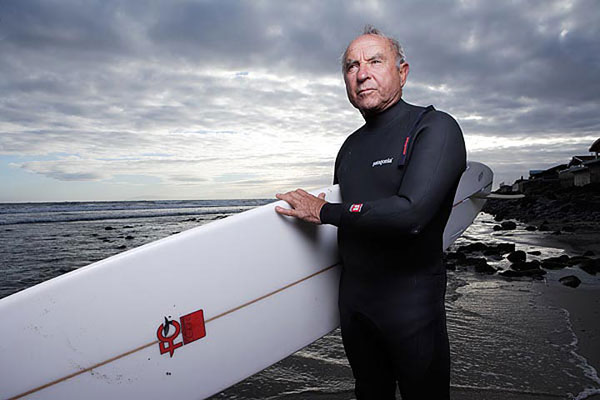
. Chouinard on Venture capitalists. "Venture capitalists are such assholes", says Yvon Chouinard, the founder of Patagonia, as he briefly discusses the case of Diamond Equipment in a captivating piece by Nick Paugartner for The New Yorker (*). By the way, Prof. Damodaran has two recent pieces on VCs: a blog post under the title "Venture capitalists don’t value companies, they price them" [see], and a VIDEO [see].

(*) Nick Paumgartner: "Patagonia's philospher-king", The New Yorker, September 19, 2016.
________________

. Paul Krugman: Brexit and the Pound. Paul Krugman on the weakness of the pound: "We face the prospect of seriously increased transaction costs between Britain and the rest of Europe, which creates an incentive to move those services away from the smaller economy (Britain) and into the larger (Europe). Britain therefore needs a weaker currency to offset this adverse impact" (*).

(*) Paul Krugman: "Notes on Brexit and the Pound", The Conscience of a Liberal, October 11, 2016.
_______________

. Vladimir Putin. The Economist is out with a special report on what it calls "Putinism". The gist: "Institutions that would underpin a prosperous Russia, such as the rule of law, free media, democracy and open competition, pose an existential threat to Mr Putin’s rotten state." I think I'm going to buy this one (*).

(*) "The threat from Russia", The Economist, 22 October 2016.
________________

Wednesday, February 3, 2016

ETHICS IN THE FINANCIAL WORLD: ARTICLES, LINKS

AM | @Mackfinance 

. Tom Mitchell: "Chinese police need diggers to unearth 'Ponzi scheme' that that took alleged $7.6bn", Financial Times, 2 February 2016
________


. Pan Kwan Yuk: "Wells Fargo to pay $1.2bn over loans case", Financial Times, 3 February 2016

Wells Fargo had been in talks with the US Department of Justice, the Department of Housing and Urban Development, the US Attorney in the Southern District of New York and the Northern District of California for more than a year over allegations that it improperly certified certain mortgage loans that did not qualify for insurance under the Federal Housing Administration (FHA) between 2001 and 2010. The government alleges that Wells Fargo should not have received insurance proceeds when some of the loans later defaulted.
________

. Laura Noonan: "JPMorgan pays almost $2.5bn to settle legal disputes", Financial Times, 26 January 2016.
 

 JPMorgan Chase will be left almost $2.5bn out of pocket after the US bank finally settled two of its biggest legal headaches left over from the financial crisis. Insurer Ambac said on Tuesday that it would receive almost $1bn from the bank to settle a long-running lawsuit about the sale of mortgage-backed securities. The news came just hours after court filings revealed that JPMorgan would pay $1.42bn to end most of its remaining disputes with the estate of the defunct Lehman Brothers. The bank issued stock exchange statements saying that neither settlement would “materially” affect earnings for the first quarter. The Ambac lawsuit centred on mortgage-backed securities sold by an arm of Bear Stearns, which JPMorgan acquired in 2008. Ambac alleged that the Bear Stearns unit misrepresented the securities. Court documents showed one Bear Stearns employee referred to some of the securities as a “sack of shit”.

Note 1: on January 24, FT informs that Goldman Sachs paid a $5.1bn penalty for "mis-selling mortgage-backed securities".

Note 2: example of a 'shitty loan'? Quicken Loans was sued on claims that it had fraudulently originated loans: "...abuses such as Quicken endorsing a loan from a borrower who requested a refund of the $400 application fee so she could afford to feed her family. She ultimately made only five mortgage payments before defaulting, costing the government about $94,000 in insurance claims" (Peter Rudegeair: "At Quicken Loans, a Will to Do Battle", Wall Street Journal, 16 June 2015)
________

. Gina Chon: "JPMorgan fined $330m for misleading clients", Financial Times, 19-20 December 2015.

JPMorgan Chase has been ordered to pay a $307m penalty for failing to disclose to clients that it was steering them to the bank’s own investment products rather than those offered by rivals.The bank agreed to pay $267m to the Securities and Exchange Commission and admitted wrongdoing in settling charges, which found JPMorgan failed to disclose conflicts of interest to wealth management clients.
________

. Joseph Cotterill: "KKR pays $30m to settle disclosure charges", Financial Times, 30 June 2016

The firm “thus, breached its fiduciary duty as an investment adviser”, the order added. “This resolution, which relates to historical expense allocation disclosures and policies and not to any current practices, allows us to focus on delivering value for those who invest with us,” KKR said in a statement. “We take our fiduciary responsibilities seriously and have strived to adapt our policies and practices to the changing nature of the industry, market and our business,” it added.
________